
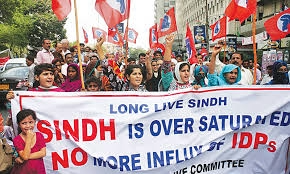
Introduction: Karachi, A City That Never Sleeps—But Now Rarely Rests
Karachi has always been a city of contradictions. A place where the sea breeze softens even the harshest realities, where dreams arrive every morning with the city buses, and where survival becomes an art form practiced daily by millions. But what is happening in Sindh—especially Karachi—today feels different. The crises are deeper, the fatigue heavier, and the hope more fragile.
This is not a report. This is not a policy essay. This is the story of how Karachi feels right now—through the eyes of its people.
Part 1: The Weight of a City—Inflation, Insecurity, and Everyday Survival
Karachi has always been tough, but today the city feels strained like never before. From Saddar to Gulshan, from Lyari to Clifton, the most repeated sentence in chai dhabas and grocery stores is simple and painful:
“Zindagi mehngi ho gayi hai.” (Life has become expensive.)
Inflation in Sindh has wrapped its fingers around every item—wheat, medicines, vegetables, transport fares. What was once a manageable struggle has become a daily negotiation.
The Rickshaw Driver’s Story
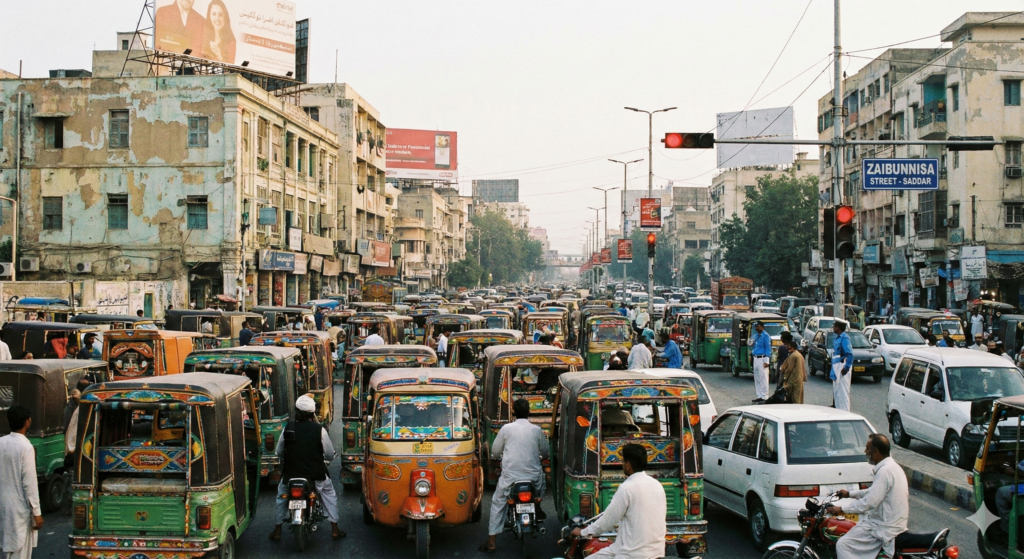
Farooq, a rickshaw driver I met near Tariq Road, said something that stayed with me:
“Petrol aur roti ki race chal rahi hai. Dono ek dosre ko hara nahi rahe… bas hum hi har rahe hain.”
(There is a race between petrol prices and the cost of bread. Neither is defeating the other… but we are the ones losing.)
His words capture the silent grief running through Karachi’s veins.
Part 2: Law and Order—Fear in a Familiar City
Karachi’s law-and-order situation has again become a central worry. Street crimes, once an unpleasant but predictable part of life, have now turned unpredictable and bold.
You no longer hear stories of someone somewhere being robbed. Now it’s:
- “My cousin got robbed yesterday.”
- “My neighbour’s son was shot resisting.”
- “They took my phone right outside the house.”
This personalization of crime—the shrinking distance between safety and danger—has changed the psychology of the city.
A Mother’s Fear
In Korangi, a mother told me she no longer allows her teenage son to step out after Maghrib.
“Bachay bahar jaate hain toh dil band ho jata hai. Jo wapas aa jaaye, woh hi bohot hai.”
(When children step outside, our hearts tighten. If they return safely, that itself is a blessing.)
These are not statistics. These are the lived experiences of Karachiites.
Part 3: Political Turbulence—The Vacuum and the Voices
Sindh’s political environment has always been dynamic, but the instability of recent years has created a sense of drift. Karachi, caught between provincial politics and federal tensions, now feels leaderless.
People ask questions that no one seems prepared to answer:
- Who truly speaks for Karachi?
- Who is responsible for fixing the drainage system?
- Who ensures clean water reaches the taps?
- Who controls the policing?
The fragmentation of authority has turned governance into a relay race where no one is willing to take the baton.
The Ordinary Citizen’s Frustration
Kamran, a shopkeeper in North Nazimabad, shared:
“Masla yeh nahi ke hal nahi hai. Masla yeh hai ke koi hal karna chahta hi nahi.”
(The problem isn’t that solutions don’t exist. The problem is that no one wants to solve anything.)
Karachi’s political story today is a story of waiting—waiting for leadership, for clarity, for direction.
Part 4: Water, Electricity, and the Infrastructure Breaking Point
Karachi’s infrastructure issues are no secret, but the current situation feels like a slow-motion collapse.
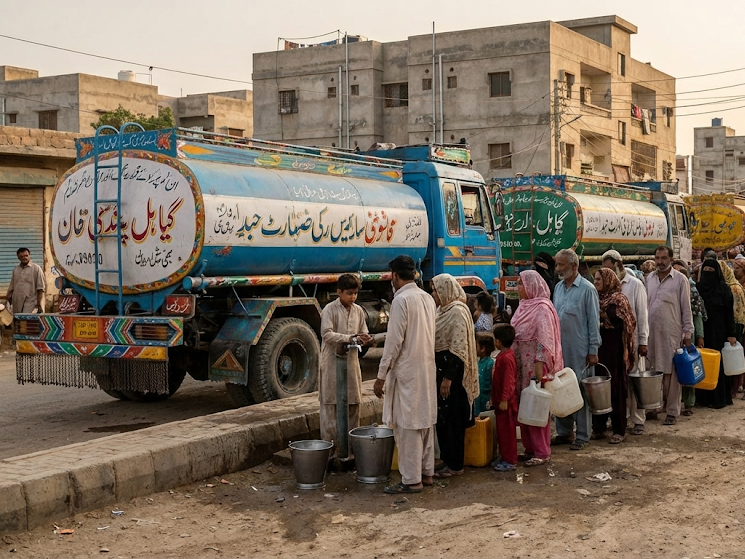
Water Shortage: A Crisis Turned Routine
Entire neighbourhoods line up for water tankers like they line up for public transport. What is supposed to be a basic right now feels like a luxury delivered on wheels.
People joke that Karachi has two seasons:
- Load-shedding season
- Tankers season
But behind that humour is exhaustion.
Electricity Failures: Darkness as a Lifestyle
Some parts of Karachi experience outages so frequent that residents no longer check the electricity schedule—they simply accept unpredictability.
A student in Malir told me:
“Main assignment nahi, light ke hisaab se plan karta hoon.”
(I don’t plan my assignments, I plan according to the electricity.)
Part 5: The Emotional Climate—Tired Faces, Heavy Hearts
If Karachi could be described in one word today, it would be: tired.
Not defeated. Not broken. Just profoundly, deeply tired.
People are tired of:
- Crises rolling in one after another
- Promises never turning into action
- Working harder but earning less
- Watching their city slip further into disorder
This emotional exhaustion is the real story of Karachi. Not just the politics. Not just the crime. Not just inflation. But the psychological burden carried by 20 million people every day.
The Resilience That Refuses to Die
And yet—Karachi lives on.
Because Karachi fights back. Karachi adapts. Karachi absorbs shocks that would break other cities.
I met a young man repairing mobile phones in a cramped shop near Empress Market. I asked him how business was.
He shrugged, smiled, and said:
“Kya karein? Karachi walay himmat nahi haarte.”
(What can we do? Karachiites never lose courage.)
This is the paradox of the city: a place drowning in problems, yet floating on resilience.
Part 6: Karachi’s Youth—Dreaming Against the Odds
If you want to understand Karachi’s silent rebellion, look into the eyes of its youth.
They are building startups in cafes with unstable Wi-Fi. Creating art in a city where the lights go out. Learning coding while generators hum in the background. Shooting documentaries with borrowed cameras.
Karachi’s youth aren’t waiting for the system to fix itself—they are creating parallel worlds of opportunity.
A Story of a Dreamer
A 19-year-old filmmaker from Liaquatabad told me:
“Humare paas sab kuch nahi hota, isliye hum sab kuch bana lete hain.”
(We don’t have everything, so we create everything.)
This spirit is Karachi’s greatest asset.
Part 7: What Karachi Needs Now—And Why the World Should Care
Karachi is not just another city. It is an economic engine, a cultural hub, and a symbol of Pakistan’s possibilities.
Saving Karachi is not charity. It is necessity.
What Karachi needs today:
- Security that protects dreams, not just streets.
- Infrastructure that respects human dignity.
- Political leadership that understands the city’s soul.
- Economic reforms that bring relief to ordinary people.
- Urban planning that treats Karachi like the megacity it is.
If Karachi collapses, Pakistan feels the tremors. If Karachi rises, the country rises with it.
Conclusion: Karachi’s Story Is Still Being Written
Karachi is battered but unbroken. Exhausted but defiant. Struggling but not surrendering.
And despite everything—crime, inflation, shortages, political turmoil—the city’s heartbeat continues.
Because Karachi is not built by governments. It is built by its people.
The fruit seller who shows up before sunrise.
The fisherman who returns at dawn.
The students who dream.
The mothers who pray.
The workers who grind.
The artists who imagine.
The people who refuse to give up.
This is Karachi today: a city wounded, but still writing its own future.
End of blog draft.